The Forecast
from Here
I. The Song
The first thing that pulled me into AI wasn’t a chatbot or a productivity demo. It was a song. Sometime in mid 2024, I was playing with one of the early AI music generators, trying to write a melancholic song about being caught in a storm. The model came back with a lyric: want the wind, but not the rain.
The image was simple, the writing and placement in the song felt elegant. A storm wouldn’t be so bad if you could just have the wind, the rush, the windows down, without the part that blurs the road ahead. For whatever reason, the impression this lyric made changed how I thought about these tools — I need to start taking this seriously.
I jumped headfirst into building. In the early days of Claude 3.5 Sonnet, if you wanted to build something real, you had to develop the skill of constant pressure — narrowing your instructions, understanding context ingestion, debugging relentlessly. You had to work the system to get outputs. And through that process, you started to learn what this stuff actually is. That experience is what jumpstarted everything else for me: building side projects, trying to make websites, coding small applications, exploring software design. This soon translated into professional opportunities — leadership roles, automating parts of my role, helping to change the way we work. I adopted a simple philosophy — if you can’t teach it, you don’t know it. And I felt it was important to know it, deeply, because that’s how you direct these agents in more effective ways. You can’t just grab a prompt and consider your problem solved. If you want to get the most from these tools, you have to speak the language with clarity and understanding.
It hasn’t all been good, though. The pace with which these tools are evolving is staggering. What felt revolutionary just a few months ago is now table stakes. The learning curve is relentless, and the tools themselves are still figuring out how to be useful. What surprises me now, a year and a half later, is the parallel. Want the wind, but not the rain — the same lyric that started my fascination has become a precise description of the opportunities and contradictions I’ve been living inside ever since.
II. The Before
For most of my career, the best parts of my work happened in front of a whiteboard, figuring out problems.
But getting it off the whiteboard was the grind. The whiteboard was where the ideas lived. Everything after it was scaffolding. Taking what you drew up and translating it into the PowerPoint deck, the pivot table, the long Excel tracker, the SharePoint site that nobody could find, the endless email chains for version control. You’d spend a morning thinking and the rest of the week packaging. The mechanics of getting an idea on paper and represented right took up the vast majority of the time. The thinking was always the good part. Getting it off the whiteboard and into the meeting minutes — that was the job.
III. The Shift
These tools became a completely new medium. Not a faster way to do the old work — something else entirely. You become a director — instructing agents where to go, what to push on, how to interact. The distance between the whiteboard and the finished product collapsed. The only bottleneck left was the thinking itself — not packaging it, but clarifying it enough to direct with. The more you understand a problem, the better you design the solution before you ever type a word. And when the thing you imagined materializes — that’s the rush. That’s what kept pulling me deeper. Learn something quickly, direct with that knowledge, watch it come together.
IV. The Contradictions
That rush has a cost. The same tools that collapsed the distance between idea and product introduced their own kind of friction. Wind and rain. Here are the contradictions I keep coming back to:
Contradiction One: You can build in hours what used to take weeks. You’d think that buys you time. It doesn’t.
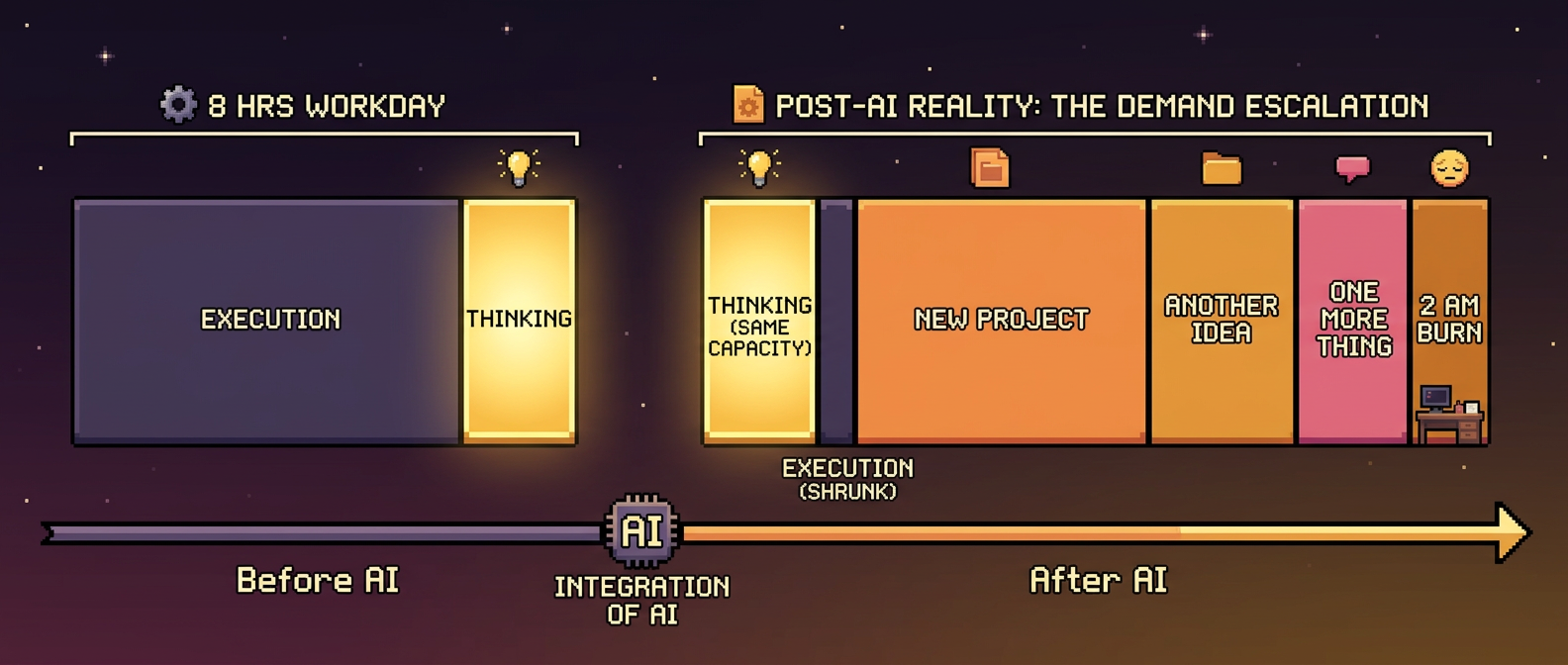
You’d expect the speed to give you your evenings back. Instead, it fills them. Tasks that used to take a week collapse into hours, and the hours don’t empty out. They fill with the next build, the next idea, the next thing you now know is possible. I stay up until 2 AM building things I didn’t know I could build. But the tools didn’t free up my time. They gave me a reason to spend more of it. It’s one part passion, one part opportunity cost. The math starts to feel different, and that’s its own kind of weather.
Contradiction Two: You produce more than ever. You use less of what you produce.
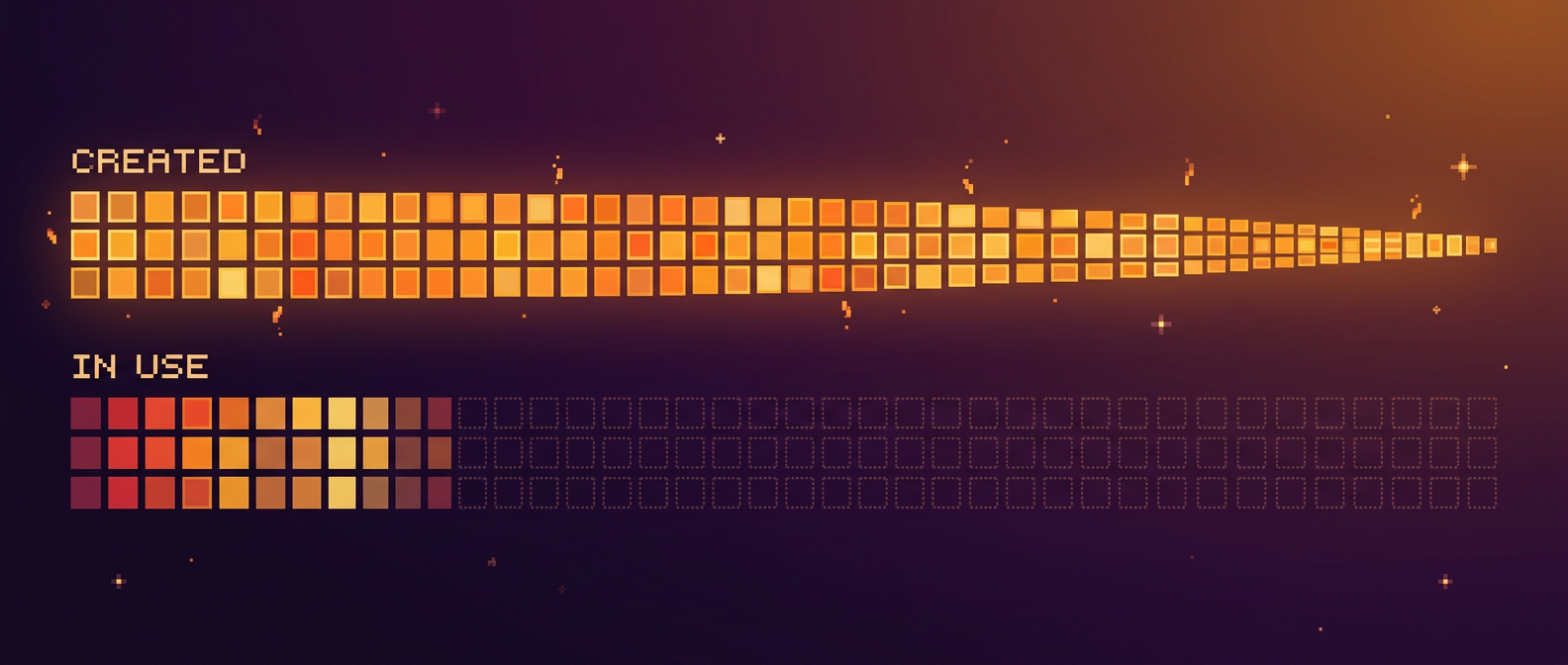
The pace of what’s possible is staggering. Creation that used to take weeks now collapses into hours. But adoption has become the bottleneck. The tools pull you into the next iteration before you’ve finished thinking about the last one. The chat interface keeps offering you the next prompt, so you keep going. I’ve been an hour deep into something before realizing I was solving for the wrong question entirely. The output is almost disposable now — creation is structurally cheap, but getting something actually used, actually adopted into a workflow or a team, is still expensive. I’ve watched this in my own work: building trainings, deploying systems, spinning up tools. The energy is real. But so much of what gets produced never makes it past the demo. Leaders are building. Colleagues are building. Everyone is spinning up solutions to problems that someone else already solved last week. Nothing stays still long enough to adopt. Getting a team to actually use something takes longer than building it. But that’s where the real value is.
Contradiction Three: You can teach someone everything you know about these tools. It won’t make them good at using them.
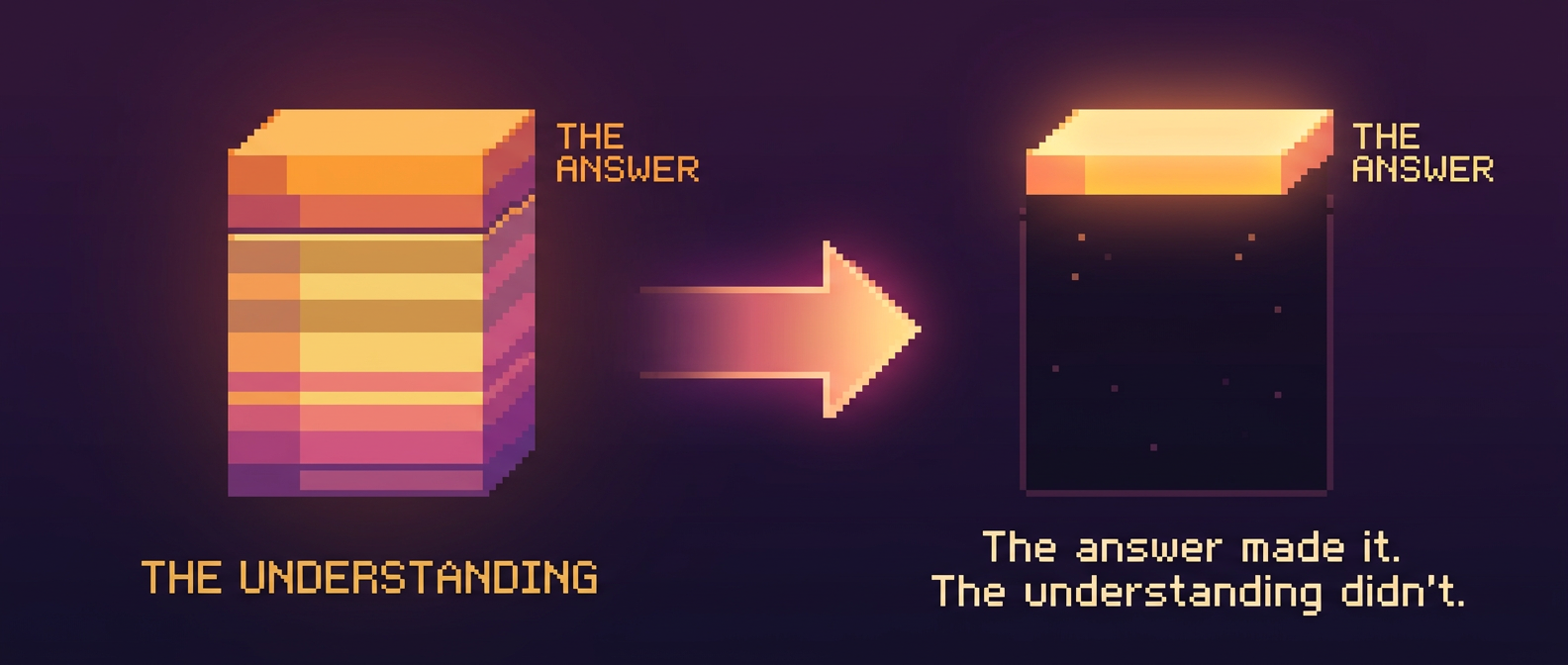
People come to me wanting a workflow. A checklist, a system, a set of steps. And I get it. But here’s what I’ve come to believe: valuable AI is a practice, not a product. Most people don’t see that distinction yet. They think about it like a system you configure once — a prompt library, a skill file, a setup you install and forget. But being good at this isn’t about the artifact. It’s about the repetition. You can get caught up collecting prompts and checklists without ever learning the process underneath them.
Playing an instrument is the most honest analogy I have. You can read every book about piano. You can memorize the scales, study the greats, understand the theory. But until you sit in front of a keyboard and press the notes and feel what sounds right — until you build your own instinct for what works — you haven’t learned it. You can hand someone an answer, but you can’t hand them the understanding. The instinct for when to trust the model, when to push back, when to throw the whole thing out — that only comes through reps.
V. The Fear
The contradictions aren’t abstract. There’s a real fear underneath all of this, and I think it’s important to say it directly. What happens when the thing that’s always made people professionally valuable — their ability to think through problems — is no longer what sets them apart? It’s not that thinking stops mattering. It’s that it stops being the differentiator. And that raises a question most people aren’t ready for — what fills the gap, economically and personally?
And the other fear is simpler but maybe worse: you can’t see far enough ahead to even know where this is going. In 1950, you could look twenty years out and have a reasonable picture of the world. By 2005, maybe that window was five years. Now? You can’t reliably see two months ahead. The models and their capabilities are changing so drastically, so fast, that the future keeps arriving before you’ve finished processing the last version of it. The window of visibility keeps shrinking, and there’s no sign of it stopping.
VI. The Forecast
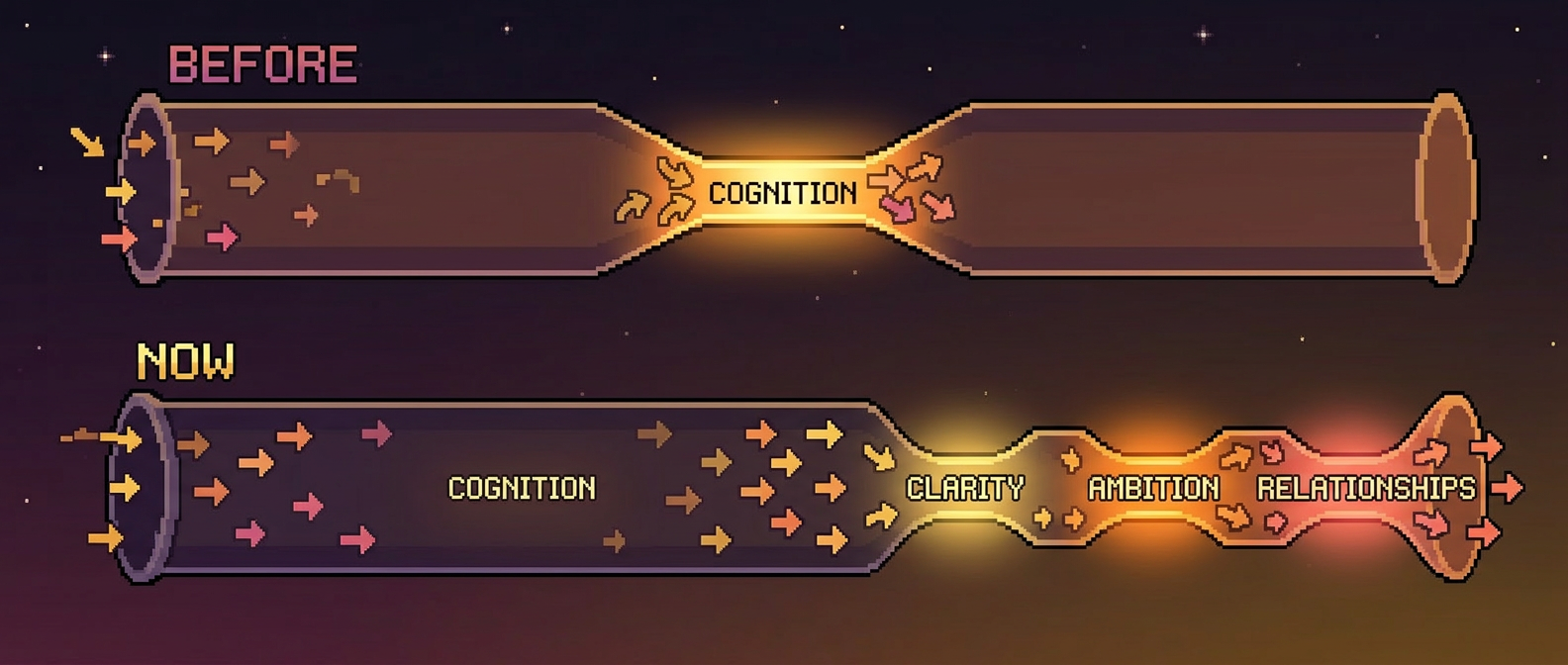
So what do you do? You focus on what you can see. I think about value through four lenses — not predictions about which model wins or which industry falls, but what I believe still matters when cognition gets cheap. These are the categories I keep coming back to when I think about how people stay valuable in what they do.
Cognition
For most of history, this was arguably the most valuable resource a person could offer. Entire education systems were built around developing it. The way we test, the way we hire, the way we measure potential — it’s almost all oriented around cognitive ability. How fast can you think through a problem? How well can you reason? That scarcity is what made it economically valuable. Companies paid a premium for the people who could do it best.
That’s changing. Not because thinking stopped mattering — but because the expectation of how much thinking you should be doing is going up. When the calculator was invented, you didn’t stop doing math. You learned to use the calculator so you could do more math, faster. The same thing is happening here. If you want cognition to remain your value driver, you need to be using these tools to multiply how much of it you’re producing. The floor is rising. What used to be impressive output is becoming the baseline.
Clarity
These models default to the average. Without a clear point of view, you get generic output — technically correct, functionally useless. The more you know what you’re looking for, the better you can direct. That starts with your own clarity — knowing what good looks like before you prompt for it, having a perspective sharp enough to steer the output somewhere worth going.
That same skill scales. If cognition is the engine, clarity is the steering. When everyone on a team can build faster, the bottleneck isn’t output — it’s direction. More people building in slightly different directions just creates noise. Clarity is what turns a room full of capable people into a team that actually ships something coherent. It’s not glamorous work. It’s the meeting after the brainstorm where you say, okay, but which one are we actually doing?
Ambition
Taking the shot. Are you engaging? Do you have an idea that needs to exist? When the cost of starting drops to nearly zero, the thing that separates people who build from people who watch is not capability. It’s the willingness to begin. To put something out there that might not work. The tools make starting trivially easy. They don’t make starting emotionally easy. That part is still on you. I think this is also why ambition sits at the core of the artistic endeavor. Art is the decision to create not because it was prompted, but because it needed to exist. Cheap cognition doesn’t threaten that. The models can generate, but they can’t decide something needs to be made.
Relationships
The enabler. Relationships drive clarity and promote ambition. This never changes, regardless of what the tools can do. The person who knows you well enough to tell you your idea isn’t working. The colleague who will actually adopt what you build because they trust you, not because you sent a deck. The leader who earns the room’s attention before they start directing it. None of that gets automated. None of it scales the way output scales. And all of it is what makes the other three actually work.
VII. The Close
We’re in the middle of it. The contradictions, the fear, the wind and the rain. It’s all happening at once and none of it is slowing down. The tools are getting better, the visibility is getting shorter, and the world on the other side of this is still hard to picture.
I don’t have a map. This is just what I can see from where I’m standing. Clarity, ambition, relationships. Those are the things I keep organizing myself around. Not because I’m certain they’re right, but because they’re what make sense to me when everything else is moving too fast to hold onto.
But I’ll say this — there has never been a better time to be curious. The barrier between having an idea and making it real has never been lower. If you’re willing to learn, willing to build, willing to stay in it even when the road is hard to see — there is more opportunity ahead than behind.
And somewhere in the middle of all of it, you have to find a way to enjoy the ride. Building this was mine.
Credits
Image Generation — Nano Banana Pro 2
Animation — Kling 3.0
Music — Suno
Web Development & UI — Claude Code
Drafting, Assistant Editor — Claude Code
A lot of the thinking in this piece has been shaped by Nate Jones. If this resonated, check out his Substack and YouTube.